
Can any security glass also be fire-rated?>
Can fire-rated glass also be impact-rated and bullet resistant?>
Can fire-rated glass also be security glass?>
What are the characteristics of bulletproof glass?>
How might security-rated glazing support door hardware in safer school design?>
What's the difference between blast- and ballistic-resistant glass?>
Both ballistic- and blast-resistant glass can withstand missile impact. The main difference between the two is that blast-resistant glass can also stand strong against the pressure and shockwaves an explosion creates.
It is important to note this distinction is more about meeting different security threats than providing extra security performance—project teams can consult with security professionals to determine the most appropriate security-rated glazing for a project.
As a specialized multi-layered safety material, blast-resistant glass is often reserved for:
While these project types can enhance their security with blast-resistant glass, their ability to incorporate the material is often limited due to the glazing’s weight and thickness as well as its overall cost. Design teams must be strategic about its specification.
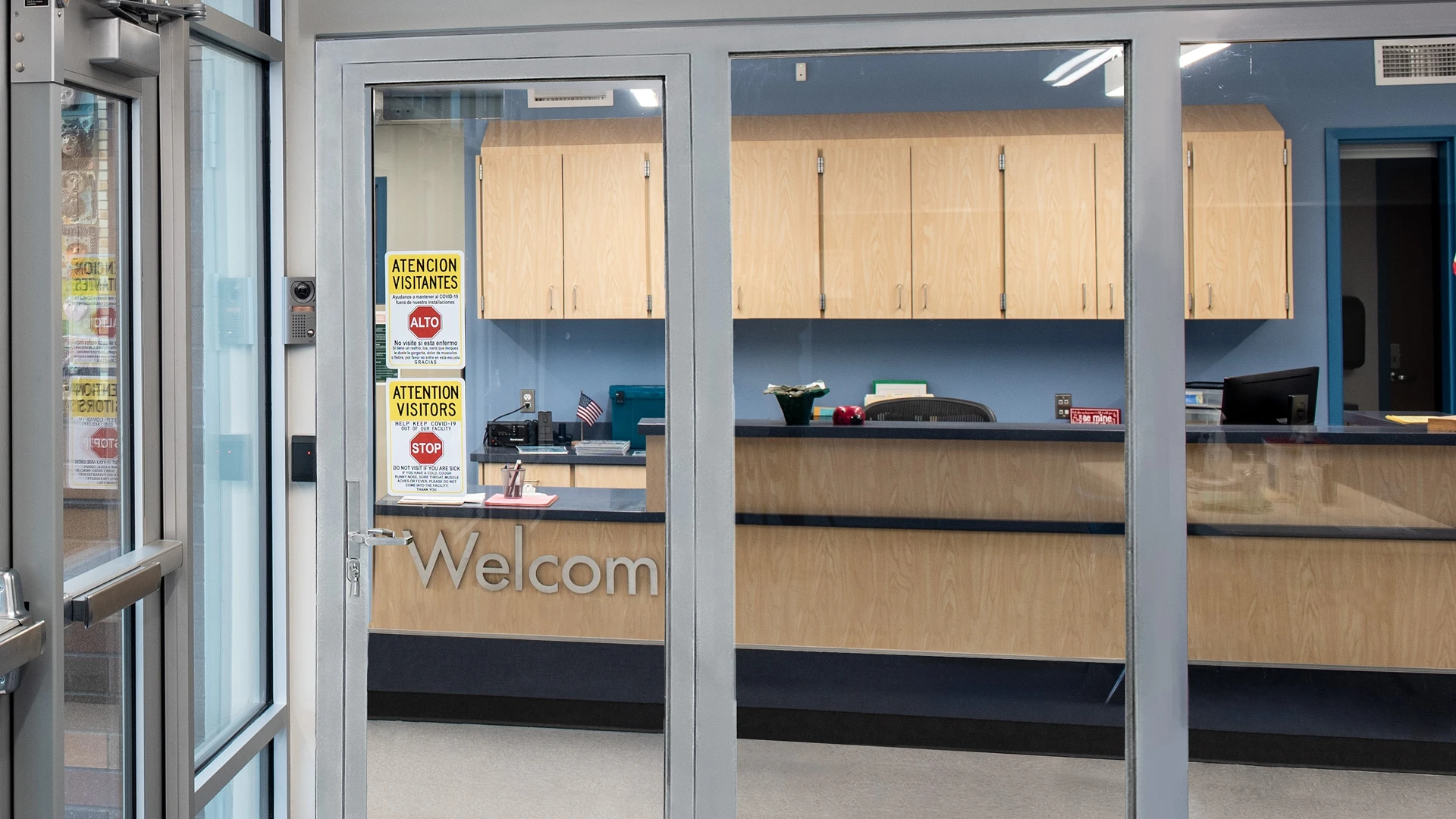
Ballistic-rated glass is tested to determine its ability to resist bullet puncture based on the round caliber, weapon and shot pattern. Like blast-resistant glass, ballistic-rated glazing is often strategically incorporated into a project, especially when designing safer schools as these projects can face constrained budgets. Along with forced-entry-rated glass, ballistic-rated glazing can help secure a school invisibly.
According to its tiered and multilayered approach to school safety design, the Partner Alliance for Safer Schools (PASS) primarily recommends ballistic glazing at school building entry points and administrative areas for a hardened building perimeter. This type of glass can be paired with interior security glazing for a comprehensive approach to enhanced school security.
However, it is important to note that interior security glazing applications may also need to meet fire- and life-safety requirements. In these instances, fire-rated security glass can deliver a multifunctional solution.
Check out Technical Glass Products’ Safer School Design Hub to learn more.
