

How to Update Openings that were Originally Wired Glass
David Vermeulen, North America Sales Director, Technical Glass Products
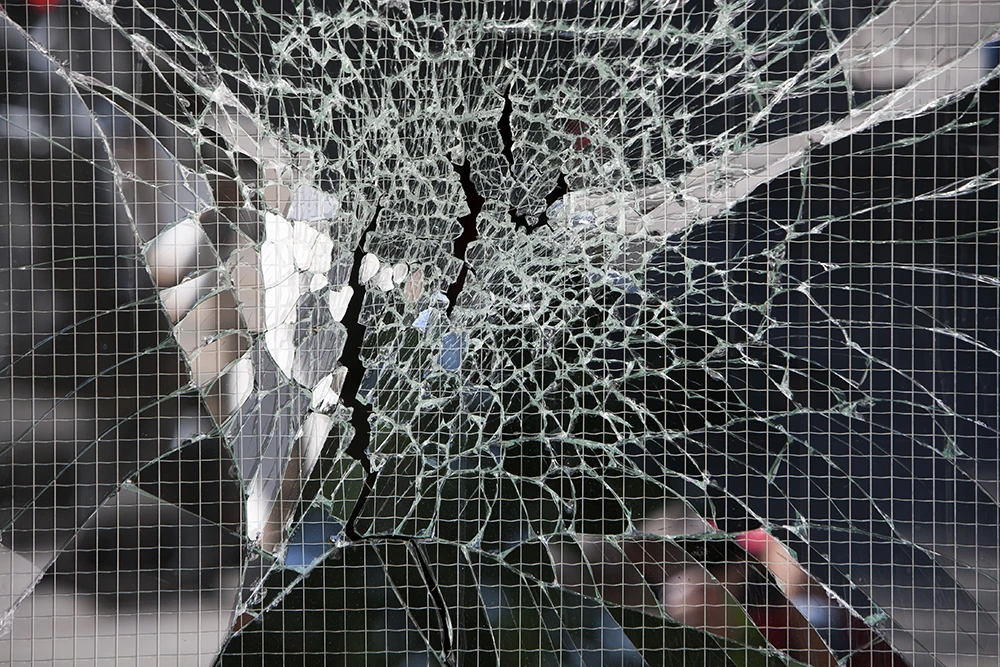
Technically, traditional wired glass is not fire-rated.
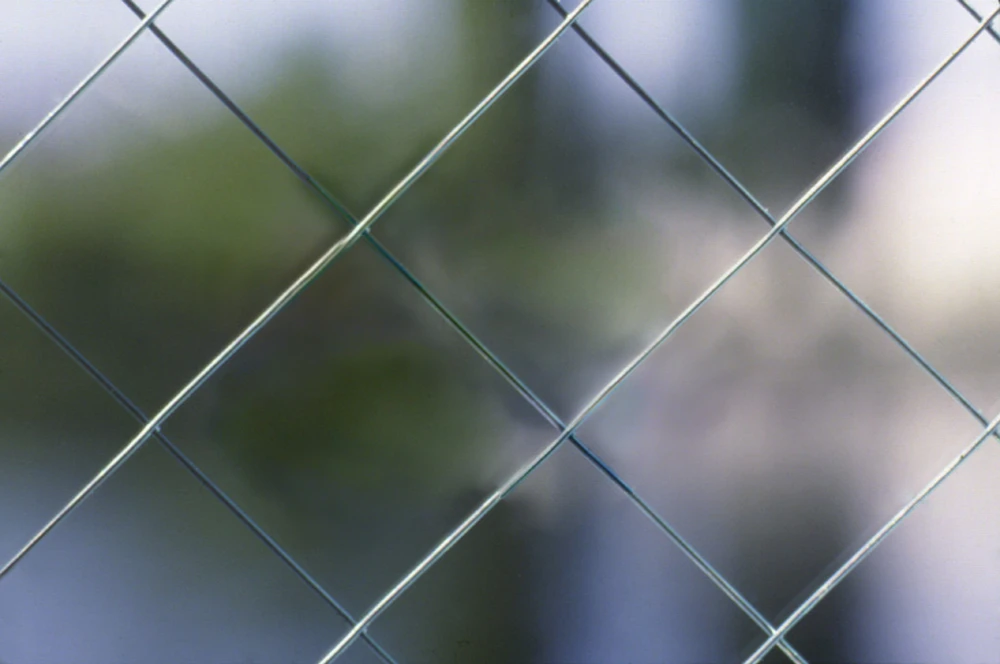
The embedded wires hold the annealed glass in place once it shatters from high heat. As the glass melts, it reseals itself, blocking smoke from billowing through it. For a long time, this material was the only option for achieving transparent fire-rated design.
However, the 2006 edition of the International Building Code (IBC) placed strict limitations on where wired glass can be used due to safety concerns around impact-induced breakage. Taking its place, fire-protection-rated glass, like fire-rated glass ceramic and other materials, and fire-resistance-rated glazing materials gave project teams more design flexibility.
As project stakeholders renovate older buildings, they may encounter instances where existing wired glass is no longer code compliant for use in "hazardous locations"—which includes doors, sidelites and any area prone to human impact. Understanding how to update these openings is essential for protecting occupant safety.
Why is wired glass considered unsafe?
Wired glass can be hazardous for two reasons. First, the wires that hold the glass in place during a fire also weaken the impact strength of the annealed glass—by up to 50 percent in some cases. Since this type of glazing is more prone to breaking from impact, it can present risk of injury to occupants.
When wired glass shatters, the wires hold fragments of glass in place, exposing people to sharp edges. The wires themselves can also gouge and scratch occupants and first responders who might be attempting rescue during a building fire.
These two reasons have enough risk potential to justify limiting the use of wired glass to specific applications within the built environment. These limitations help maintain the safest conditions possible.
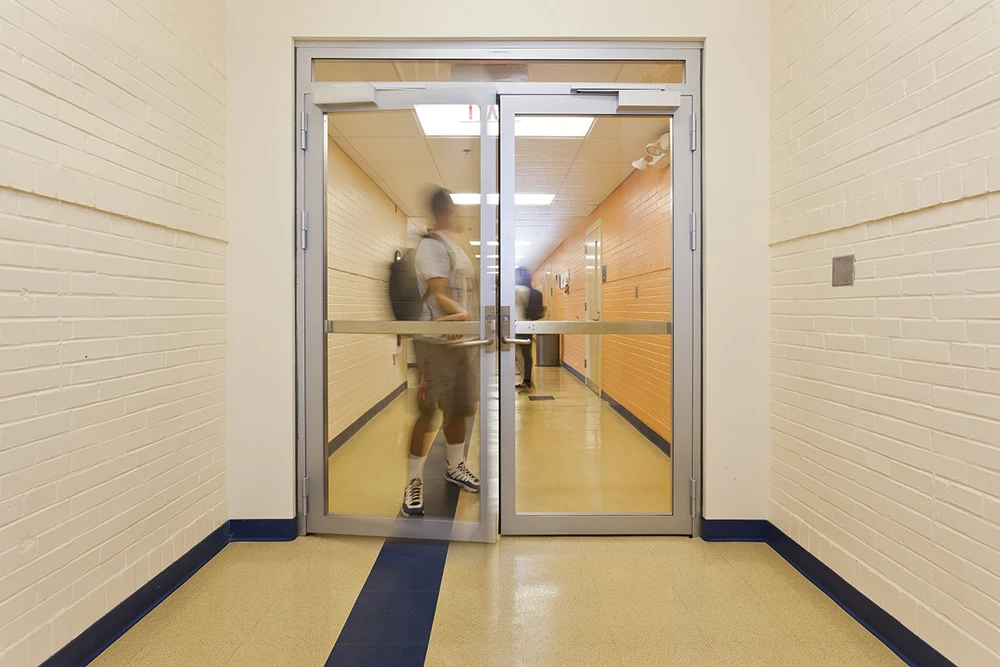
Replacing wired glass with fire-rated glazing
When design teams encounter wired glass in renovation projects, it can be difficult to know how to replace the material.
For appropriate glazing updates, building professionals are encouraged to first assess the application by asking questions like: Is it being used in a fire door or fire-rated door assembly? Is it a window? If it is in a window, how large is the window compared to its wall? Would the design benefit from expanding the glazing area? Is the opening in a fire barrier, fire wall or fire partition?
The answers will help guide designers through local building codes to determine if an assembly needs:
- To have fire-protection- or fire-resistance ratings
- To meet a certain fire rating duration (often between 45 and 120 minutes)
- To be within certain dimensions based on the size of wall it is in
- To satisfy temperature rise criteria
Once project teams know what fire rating criteria to look for, they can consult a glazing assembly’s fire label to see if it meets the requirements for a specific application. It is important to note all components of a fire-rated glazing assembly, including its frames and hardware, need to meet the fire rating requirements listed in the local codes.
Special consideration: impact ratings for hazardous locations like schools and behavioral health spaces
Some fire-rated glass is not impact-rated. While it still can withstand more force than wired glass, these options may not be code compliant for every application. For instance, many openings within schools and behavioral health centers must be able to resist impact to avoid injury risk. Behavioral health spaces must also minimize instances of elopement for patients.
For behavioral health centers and other applications that would benefit from impact ratings, architects generally have a couple options for impact-resistant, fire-rated glazing. The first is to look for fire-rated glass that has passed the impact test standards ANSI Z97.1 and CPSC 16 CFR1201 (Cat. I and II). Another option is to look for options that meet test standards for forced-entry resistance (such as ASTM International’s ASTM E2395 or H.P. White 5-aa1).
Designers have many options for impact- and fire-rated glazing. For example, Technical Glass Products (TGP) offers Pilkington Pyrostop® for applications that need impact ratings and fire-resistance ratings. There is also FireLite Plus® Forced Entry for fire-protection-rated glass that also meets forced-entry resistance standards.
Building renovation goes beyond fire and life safety building codes
While ensuring occupant safety by replacing wired glass with fire-rated options is crucial to many retrofit projects, it is not the only concern design teams may have. Since the IBC placed limitations on wired glass use two decades ago, there has been an increased focus on occupant comfort and sustainability.
Allowing substantial amounts of daylighting within the built environment, fire- and non-rated architectural glass can improve occupant wellbeing. When these systems contribute to operational efficiency through improved U-values and environmental impact transparency with Environment Product Declarations (EPD) and Declare Labels, they can help teams earn credits toward LEED or Living Building Challenge certification.
The reality is that all renovations will have to solve challenges in updating architectural components to current building code standards and best practices, whether that is through the use of fire-rated glass or by looking toward more sustainable approaches to construction.
For 50 years, TGP has supported building professionals renovate existing buildings with a wide range of glazing solutions. Visit TGP’s Project Gallery to see how transparent, fire-rated glass has reshaped existing buildings.

David Vermeulen is North America Sales Director for Technical Glass Products and also the author of the Fired Up blog on Glass Magazine.


