

Fire-Resistive vs. Fire-Protective Glass: Understanding Testing Protocols and Safety Standards
David Vermeulen, North America Sales Director, Technical Glass Products
Section 701 of the 2024 International Building Code (IBC) begins, “The provisions of this chapter shall govern the materials, systems and assemblies used for structural fire resistance and fire-resistance-rated construction…” It begs the questions, what does fire-resistance-rated mean? And how does fire-rated glass fit into these fire safety protocols?
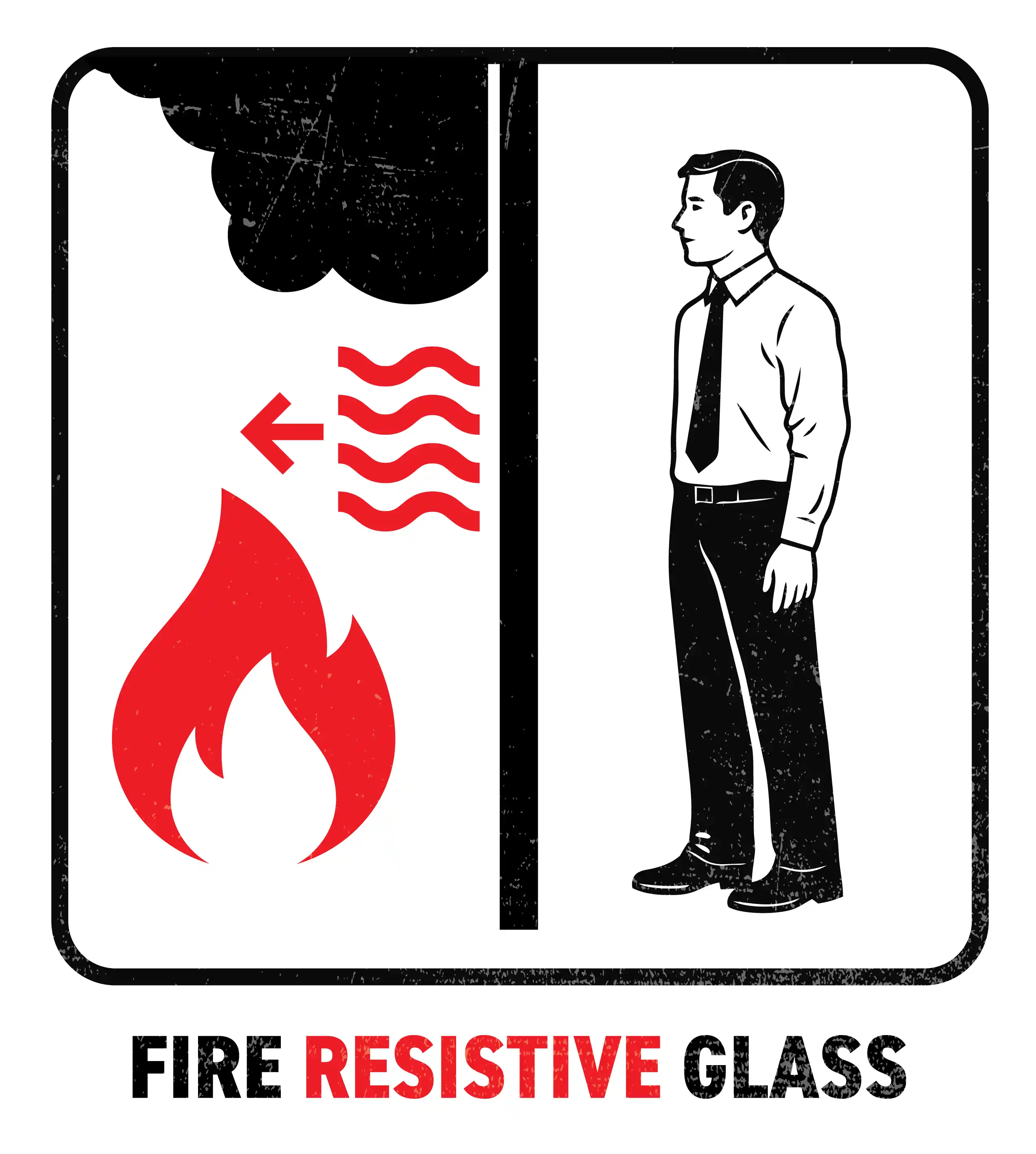
Fire-resistive glass blocks the spread of smoke, fire, radiant and conductive heat. In contrast, fire-protective glass defends against smoke and fire. Both categories of fire-rated glazing have their uses for supporting fire safety protocols in multiple building occupancy types.
But how do testing facilities determine which rating a glazing assembly has? And are there different testing protocols for fire-resistive and fire-protective glass?
While a system will undergo the fire test at an independent, third-party testing facility no matter its fire rating, the performance criteria for meeting the baseline for a fire-protective rating differs from those for a fire-resistance rating. Understanding these differences and how the performance data is inscribed on a glazing system’s fire label can help design teams streamline specification.
What are the different testing protocols for fire-resistive and fire-protective glass?
The fire test provides repeatable protocols to approximate how a glazing assembly will perform during a fire. The test increases temperature at a controlled rate until it reaches its maximum temperature, which is held for a standard duration (usually between 45 and 120 minutes). Systems rated beyond 20 minutes must also endure the hose stream test.
For fire-protective glass to pass the test, it must not fail during the test procedure. Failure can mean fracturing, splitting from its frame and other results that would allow the spread of smoke and fire. The ambient temperature on the non-fire side of the test wall is not taken into consideration when determining if a system passes or fails.
In addition to the fire-protective criteria, fire-resistive glass must also ensure the ambient temperature on the non-fire side of the test wall remains below a certain threshold as determined by the standard’s protocols. This helps ensure means of egress routes remain passable during a fire emergency.
The data from the fire test is included on the fire label, which the IBC has standardized. Fire-rated glass labels are typically found on the bottom corner (right or left-hand) of the glass lite; it should remain visible after installation. The label also lists which locations are appropriate for a product’s use, if it meets fire door criteria, if it passes the hose test and the duration of its rating. The interactive IBC label guide from Technical Glass Products (TGP) breaks down each mark on the label to support building professionals in meeting all applicable fire safety protocols.
Fire-protective glass supports multiple goals throughout a project
When specified in the right applications, fire-protective glass can offer designers a means for achieving code-compliance without inhibiting open sightlines and more intuitive wayfinding. It is permissible in “opening protective” assemblies, including doors (along with sidelites, transoms and vision panels), interior windows and partitions, corridor applications and more.
For example, the renovation of Lincoln University's Grim Hall utilized fire-protective glass ceramic and fire-rated framing systems in multiple door assemblies throughout the life sciences building.
These assemblies meet building code requirements for door assemblies within corridors and support the design goal of modernizing the building with today’s advanced materials. The specifiers selected FireLite® NT and Fireframes® Designer Series Doors. With narrow-profile frames and glass ceramic with ultraHD® Technology, these door assemblies offer a close visual match to non-rated assemblies for a more cohesive design overall.
Fire-resistive glass offers more expansive glazing areas throughout the built environment
Because fire-resistive glass performs similarly to fire-rated wall materials, it can be specified in a wider range of applications, including temperature-rise doors, expansive openings and even full curtain wall assemblies and fire-rated glass floor systems. This allows designers to achieve code-compliant designs optimized for openness, daylight access, intuitive wayfinding and much more.
As an example, the design team behind the Alan Magee Scaife Hall renovation used fire-resistive glass in multiple applications along the project’s central stairwell. The Fireframes® Heat Barrier Series fire-rated doors meet temperature-rise criteria without compromising visual connection. Likewise, the floor-to-ceiling, fire-rated, butt-glazed wall panels that comprise the majority of the stairwell’s interior walls significantly increase the glazing area within the system’s narrow-profile perimeter frames. Combined, both fire-resistance-rated glass systems preserve sightlines and maximize the amount of light penetration from the exterior, non-rated glass curtain wall.
Using multiple glazing assemblies to solve design challenges
Given the many types of openings, walls, enclosures and other architectural features, a building will likely need a mix of fire-rated glass, frames and other materials to meet building code requirements efficiently. This need can create multiple challenges beyond the initial designs of a building.
Ordering several fire-rated glass systems from multiple manufacturers can slow construction if differing lead times are not considered. It can also make routine maintenance and alteration difficult for building owners since manufacturer contact information will be assembly-dependent.
Selecting a manufacturer who can provide multiple fire-rated solutions across the entire built environment can not only help designers realize their more ambitious design goals but also help contractors and building owners in the long run.
Contact TGP today to learn more about how a single fire-rated source can deliver efficiencies through the building process, from design through occupancy.

David Vermeulen is North America Sales Director for Technical Glass Products and also the author of the Fired Up blog on Glass Magazine.


