

How to Specify Clear-vision Fire-resistive Glass Throughout the Built Environment
David Vermeulen, North America Sales Director, Technical Glass Products
As projects continue to prioritize openness, daylight access and occupant wellbeing, architects will often look to glass as a way to achieve code requirements, sustainability certifications, security goals and much more.
With project teams expanding the use of transparent glazing beyond traditional openings, some designs may benefit from full walls of maximum-vision fire-resistive glass. These glazing assemblies outsize doors, sidelites, window panels and other glazing applications that take up a fraction of a wall’s total area. As a result, they are often held to the same standards as wall assemblies, which can complicate specifications when a design calls for fire-resistance rated glass. However, specifying advanced fire-rated glazing assemblies can drive value throughout the entire project.
To support designers in pushing the boundaries on transparent fire-rated design, the following explores fundamental considerations for planning full walls of clear-vision fire-resistive glass.
What terms are important when specifying 2-hour fire-rated glass wall systems?
Before discussing code-driven requirements and other considerations for floor-to-ceiling fire-rated glazing systems, it is important to distinguish a few words that sound similar and refer to similar looking parts of the built environment but have different and specialized meaning in model and local building codes. Depending on which term is appropriate, an application may need 120-minute fire-rated glazing, 60-minute fire-rated glazing or systems rated for three or four hours.
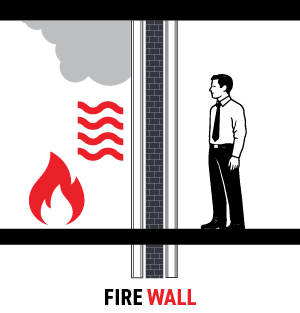
Fire walls are structurally stable and extend continuously from the foundation through the roof of a building.
- Meant to prevent the rapid spread of fire across property lines or within large structures
- Fire-resistance rating requirements can be found in Section 706.4 of the 2024 IBC
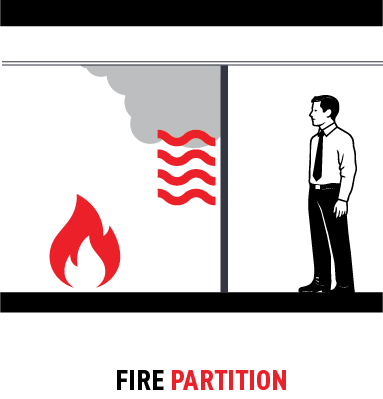
Fire partitions restrict fire and smoke to a specific area for compartmentation and protecting means of egress.
- Non-structural and may terminate at floor or ceiling
- Typically require one hour of fire-resistance according to ASTM International (ASTM) E119 or UL Solutions (UL) 263
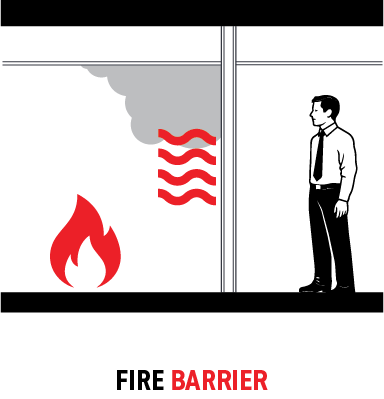
Fire barriers are any element of the built environment meant to inhibit the spread of smoke, fire and radiant heat.
- Floor structure to ceiling structure
- Section 707.3.10 in the 2024 edition of the IBC lists their fire-resistance rating requirements
When specifying maximum-vision fire-resistive glass walls for these parts of the building, design teams need to ensure the glazing is fire-rated appropriately to its function. For example, according to the 2024 IBC, a fire barrier in an assembly occupancy (Group A) would need a 2-hour fire-rated glass wall system to be code-compliant.
What is radiant heat-blocking glass and how does it fit into 2-hour fire-rated glass wall systems?
When designers use 120-minute fire-rated glazing for full wall assemblies, they will likely need to achieve a fire-resistance rating, which means the glass and frames block the spread of fire, smoke and radiant heat according to test standards ASTM E119 or UL 263. Radiant heat-blocking glass maintains egress routes and shelter-in-place spaces to keep occupants safe whether they can exit on their own or need assistance from first responders.
While large spans of clear-vision fire-resistive glass usually dominate discussions about these systems, other components, like framing, are equally important when it comes to meeting code-driven requirements for fire and life safety. This is because the whole floor-to-ceiling fire-rated glazing system will receive its fire rating according to the component with the lowest fire rating. Further, the framing systems are key to holding heavy, fire-rated glazing in place and upholding the integrity of the system during critical moments in an emergency. In other words, a glazing system is only as strong as its weakest link.
Maximizing visual connection in floor-to-ceiling fire-rated systems
Just because fire-rated frames need to be strong to ensure a glazing system does not mean they need to be bulky—it also does not mean the glazing needs to compromise optical clarity. Clear-vision fire-resistive glass and narrow profile framing systems can help improve visual connection and access to natural light when designers incorporate floor-to-ceiling fire-rated glazing systems into a project.
Standard architectural glazing, despite being perceived as clear, will often have a minor blue or greenish tint. Fire- and radiant heat-blocking glass is commonly made by combining glass lites with transparent intumescent layers, which, depending on the manufacturer’s capabilities, can impact their tint and create discontinuities with adjacent systems. Options like Pilkington Pyrostop® layer Pilkington Optiwhite™ nearly colorless, wireless, low-iron float glass with clear intumescent interlayers to create a clear-vision fire-resistive glass unit.
As mentioned earlier, fire-rated glazing is only one piece of the puzzle. When it comes to aesthetics, framing establishes the basis for how a system looks, both in size and style. For example, fire-rated framing components with narrow profiles allow both a larger glazing area and a close visual match to adjacent non-rated systems. This grants designers the flexibility to create 2-hour fire-rated glass wall systems that seamlessly blend into the built environment. When these frames utilize the strength of steel, they can hold 120-minute fire-resistance-rated glazing, which can be up to four times heavier than non-rated glass, while maintaining slender profiles—and often without intermediate supports. Both qualities support maximum-vision fire-resistive glass assemblies.
Seeing 20/20 when it comes to clear-vision fire-resistive glass
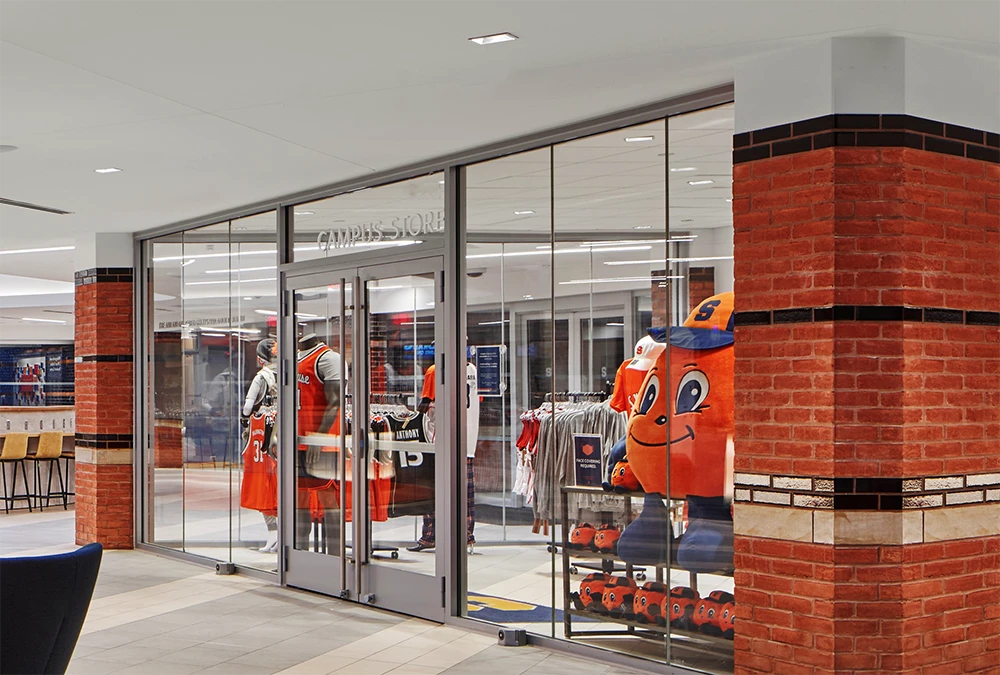
Designers were once limited when it came to balancing transparency with achieving code-driven requirements for fire and life safety. This is evident when comparing images of the original design with the renovated Schine Student Center. This project moved from dark, closed-off spaces to highly connected, light-filled interiors meant for student life by utilizing multiple floor-to-ceiling fire-rated glazing systems.
This award-winning renovation project, and others like it, show that, with the advancement of nearly all aspects of fire-rated glazing, today’s buildings are capable of achieving a high level of code-compliant transparency and daylight access. But to achieve these goals, design teams must know the options and requirements for clear-vision fire-resistive glass assemblies.
In addition to a wealth of online resources, the expert team at Technical Glass Products (TGP) can provide presentations to support design firms in knowing their options for 120-minute fire-resistance-rated glazing, or any other fire-rated glazing system.

David Vermeulen is North America Sales Director for Technical Glass Products and also the author of the Fired Up blog on Glass Magazine.


