

Designing for Flexibility: Fire-Rated Glass vs Gypsum Walls
David Vermeulen, North America Sales Director, Technical Glass Products
Gypsum is a traditional material for fire-rated wall construction. And for a long while it was the only option available.
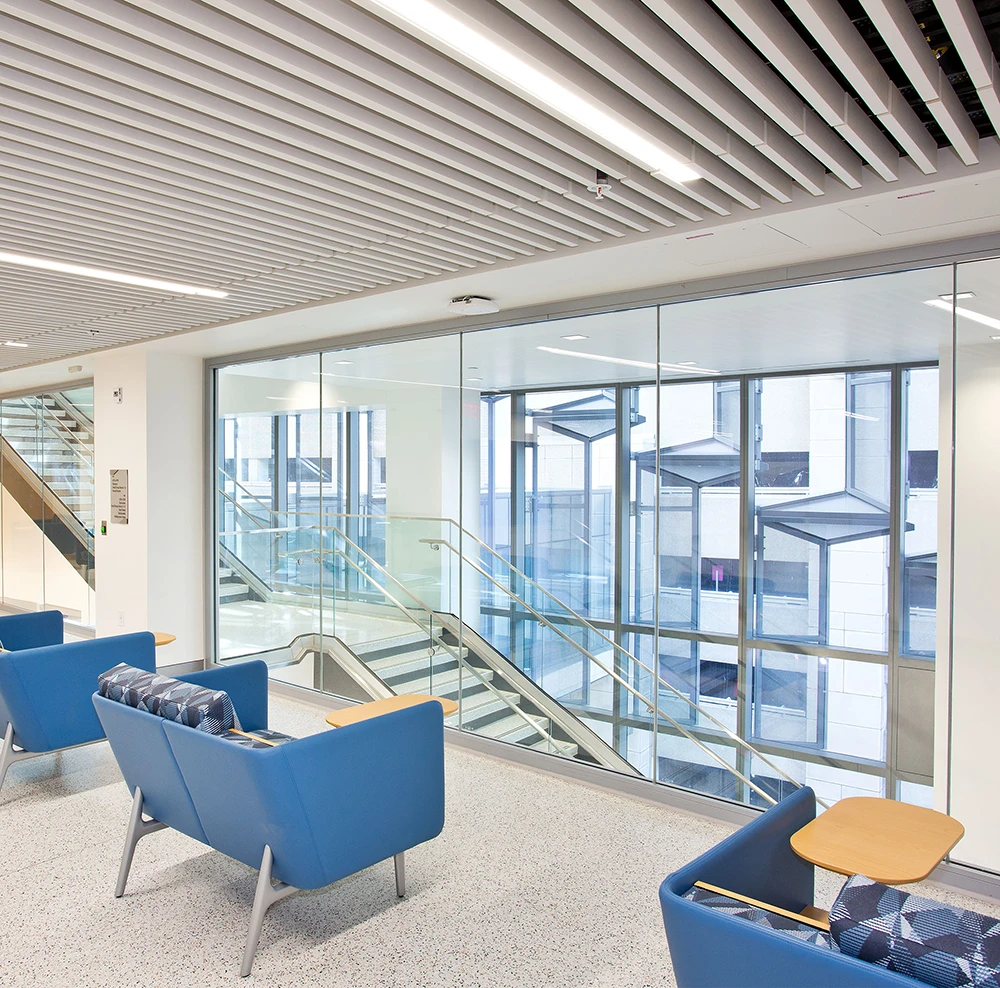
However, with the advent of fire-resistance-rated glazing, designers can now plan floor-to-ceiling fire-rated glass walls to improve daylight access, visual connection and much more. Because these systems are capable of delivering a sleek, modern look, some professionals wonder how are fire-rated glass walls code compliant.
The answer is that these assemblies often obtain their fire-resistance ratings by incorporating transparent intumescent interlayers, which swell into an opaque insulating rigid foam char when exposed to fire. This allows them to block fire and smoke as well as radiant and conductive heat according to UL Solutions UL 263 and ASTM International ASTM E119 test standards for glass wall assemblies.
With multiple fire-rated options available, design teams are encouraged to do a full fire-rated wall system comparison to determine the best options for a project. To support this, the following offers a brief introduction to both gypsum and fire-rated glass walls.
What are the benefits and limitations of gypsum walls?
Gypsum panel boards can achieve fire ratings up to four hours. Easy to install, gypsum can be a versatile material in fire-rated design.
But it does come with limitations. The most evident is that, as an opaque material, gypsum limits a design’s ability to incorporate natural light and visual connection—both key elements in creating a welcoming and occupant-centered built environment. Gypsum is also vulnerable to impact and mold, making it unsuitable for exterior applications.
But how does this building material compare to a fire-rated glass wall?
Fire-rated glass walls expand design potential
With fire-resistance ratings up to 120 minutes, fire-rated glazing assemblies can be used for walls of transparent glass, temperature-rise fire doors, multi-story fire-rated curtain walls and much more.
Suitable for interior and exterior applications, these fire-rated glass systems pass fire rating test standards UL 263 and ASTM E119 and meet impact-resistance standards ANSI Z97.1 and CPSC 16 CFR1201 (Cat. I and II), demonstrating they can withstand up to 400 foot-pounds of force without shattering. Fire-rated glass walls can even be specified for ballistic and forced-entry resistance.
By these metrics alone, fire-rated glass walls allow a much larger range of code-compliant design freedom than gypsum. But not all fire-resistance-rated glazing is the same.
For instance, all fire-rated glass options from Technical Glass Products (TGP) feature narrow-profile steel frames to provide a closer visual match to adjacent non-rated assemblies. Further, fire-rated butt-glazed assemblies eliminate vertical mullions to create uninterrupted spans of fire-rated glass wall panels. Both options support the creation of light-filled, visually connected and safe buildings.
How to ensure fire-rated glass walls are code-compliant
Fire-rated glass walls offer distinct advantages in achieving a modern approach to code-compliant design. But specifying them is often more nuanced than using traditional materials. This is largely because these systems can be used in several applications and their installation requires multiple fire-rated component parts—framing, gasketing, glass and anchors to name a few.
The first step to ensuring fire-rated glass walls are code-compliant is to consult local building codes and contact an Authority Having Jurisdiction (AHJ) to clarify project requirements. After this, design teams can review their door, window or transparent wall options by checking which test standards the glass and the framing components have passed.
Collaborating with a proven manufacturer to find fire-rated solutions that meet the particular performance requirements and aesthetic goals can help streamline this process.
Fire-rated glass vs gypsum: a full wall system comparison
Both fire-resistance-rated glass and gypsum can be specified to meet code requirements for fire and life safety. But that’s where the ability to make a wall system comparison ends.
These materials have different aims. For gypsum, the aim is almost entirely functionality. Fire-rated glass walls, on the contrary, marry form and function to help designers create safer and more beautiful buildings.
TGP offers multiple web-based design and specification tools to streamline the use of fire-rated glazing. For instance, the Product SpeciFIRE® uses prompts to help designers navigate their many options.

David Vermeulen is North America Sales Director for Technical Glass Products and also the author of the Fired Up blog on Glass Magazine.


