

Do Data Centers Benefit from Fire-Rated Glazing?
Devin Bowman, General Manager, Technical Glass Products
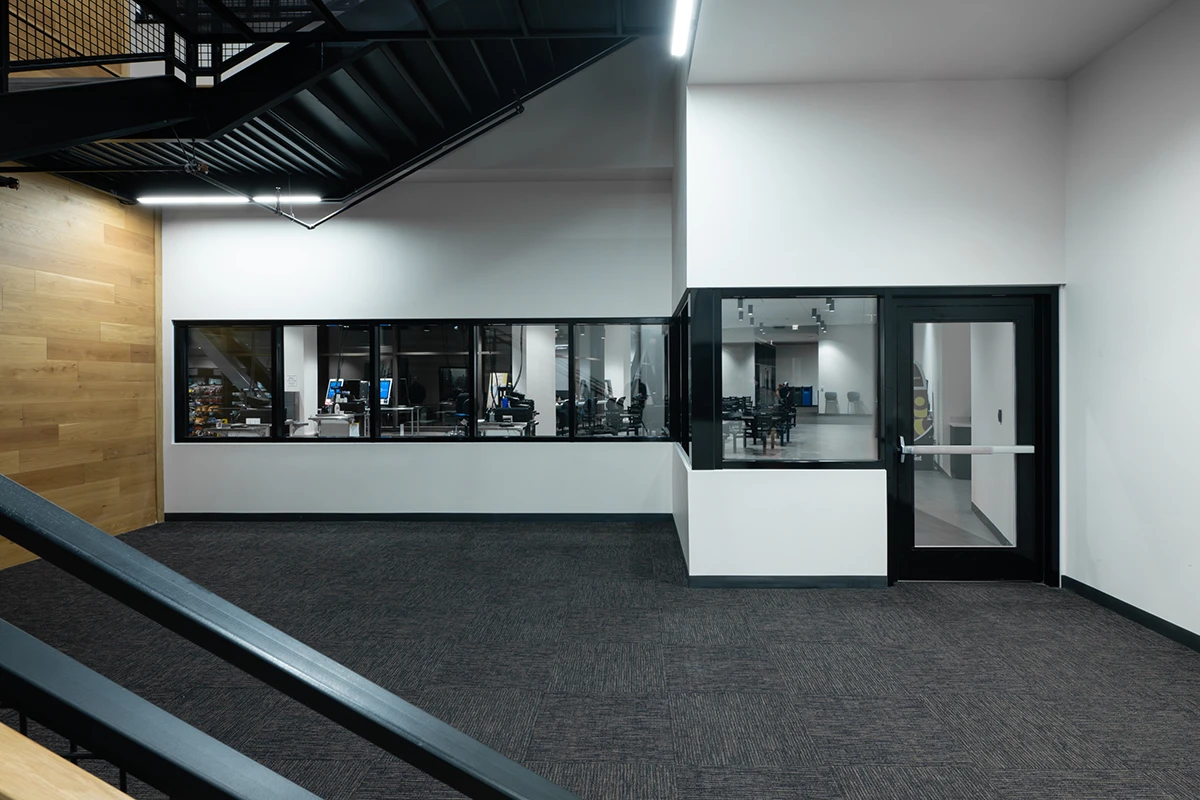
Fire and life safety design for data centers is slightly different than other projects for a few reasons: they have relatively few occupants given their size, they house systems that generate a lot of heat and they likely contain a concentration of lithium-ion batteries. All these reasons shift the bulk of fire-rated design away from safeguarding egress to maintaining compartmentation. With the importance of compartmentation, there is also a need to ensure systems can be monitored efficiently.
Fire-rated glass wall systems offer a viable solution. These interior glass partition systems maintain transparency to allow data center employees to observe equipment status, warning lights, access conditions and other operational indications without having to enter protected rooms too frequently. They are also able to provide critical compartmentation for up to 120 minutes according to ASTM International standard ASTM E119 and UL Solutions standards UL 263, UL 9, UL 10B and UL 10C.
The ability to aid compartmentation strategies is essential as data centers often have equipment susceptible to thermal runaway fires.
Fire-rated glass wall systems safeguard against thermal runaway
Thermal runaway fires are caused by self-sustaining chemical reactions (often inside a lithium-ion battery). These reactions occur with startling speed and burn extremely hot compared to other types of fires—often exceeding what automatic sprinkler systems can contain.
By enclosing clusters of data center equipment within fire-rated glass wall systems, design teams can minimize the potential damage thermal runaway can cause throughout a data center. These glazing systems also defend occupants and first responders from the fire and toxic gases released from ignited batteries, cables, processors and other common equipment for the duration of their fire rating.
On the one hand, this helps prevent fires from spreading and destroying other costly infrastructure. On the other, fire-rated interior glass partitions work alongside active fire suppression systems—all while maintaining design transparency for day-to-day operation.
Fire-rated glass doors and fire-rated window systems support observation and protection
While fire-rated glass wall systems can create large transparent assemblies for a more open aesthetic, designers have multiple options for creating visually connected floorplans that meet code-compliance standards for compartmentation. For instance, fire-rated window systems can open portions of an opaque wall to allow occupants views into protected rooms.
Fire-rated doors can do the same, especially when paired with sidelites and transoms. These assemblies offer visual connection that can be fine-tuned to the specific needs of an application. This flexibility allows project stakeholders to find the most appropriate intersection between design-forward fire defense and overall project cost.
The benefits of multifunctional, fire-rated interior glass partition systems
Fire and life safety will continue to be essential to code-compliant data center design. However, it is important to note that these projects will also likely benefit from other forms of high-performance glazing. For example, security- and fire-rated glass doors can help project teams plan for code-driven fire and life safety while also establishing a crucial barrier to unauthorized access.
Given the amount of investment into these projects and how they support crucial national infrastructure, safeguarding their most vulnerable components from fire and other threats can be key in terms of maximizing their long-term value.
Full security- and fire-rated assemblies, like TGProtect® FR System, or multifunctional, fire-rated glass can help designers achieve code compliance. They can also help enhance the security around critical parts of a data center: uninterrupted power supply bays, battery unit storage areas, server racks and more.
Go beyond gypsum with fire-rated glazing
Fire-rated glass wall systems, doors, windows and other assembly types allow data center designs to maintain visual openness to streamline day-to-day operations and minimize potential disruptions to service. They do so without compromising code-driven requirements for fire and life safety.
Further, while traditional opaque materials, like gypsum board, may require special layerings and design to achieve ratings beyond an hour, fire-resistance-rated glass can provide fire ratings up to 120 minutes and in configurations that glazing contractors can install efficiently.
Download BIM and CAD files of these fire-rated glazing assemblies today to plan tomorrow’s data centers.

Devin Bowman is General Manager of Technical Glass Products (TGP) and AD Systems. With nearly 20 years of industry experience, Bowman is actively involved in advancing fire- and life-safety codes and sits on the Glazing Industry Code Committee (GICC).


