
Vancouver, BC
Architect: KMBR Architects
Product: Fireframes SG Curtainwall® Series with Pilkington Pyrostop® transparent wall panels; Fireframes® Designer Series doors with Fireframes® Aluminum Series sidelites and transoms
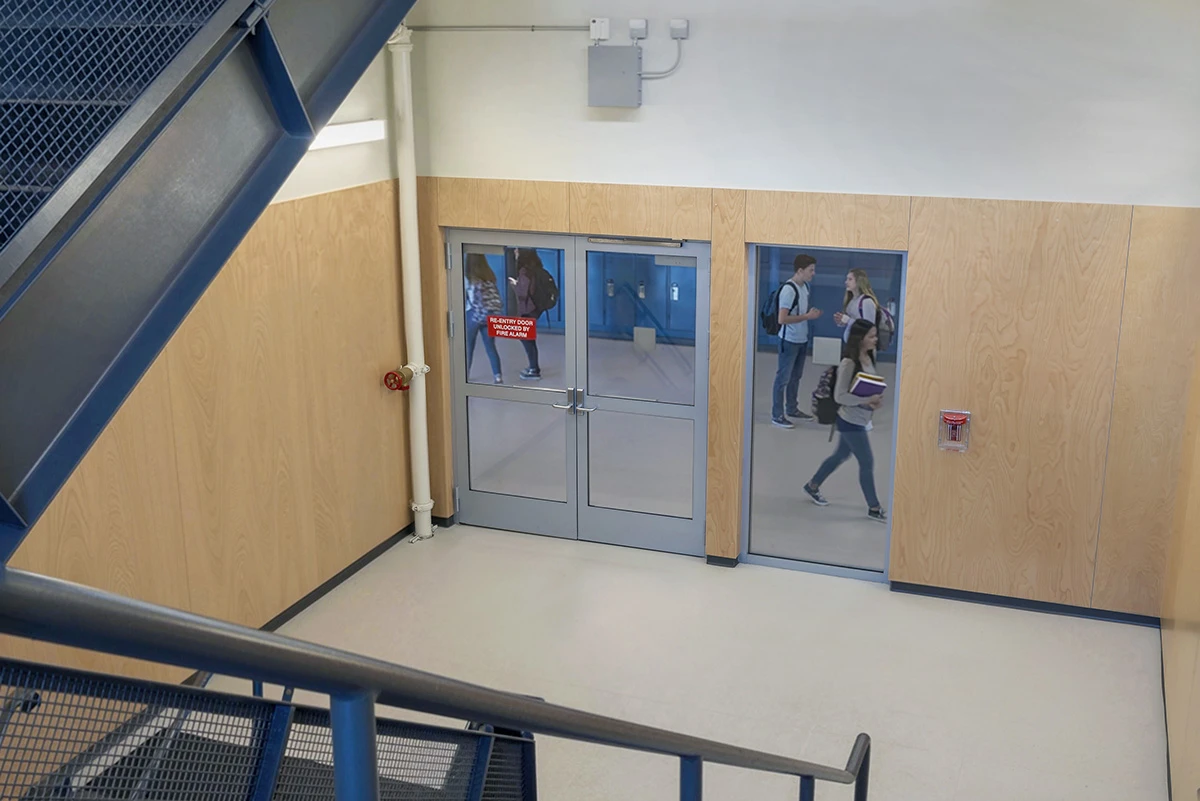
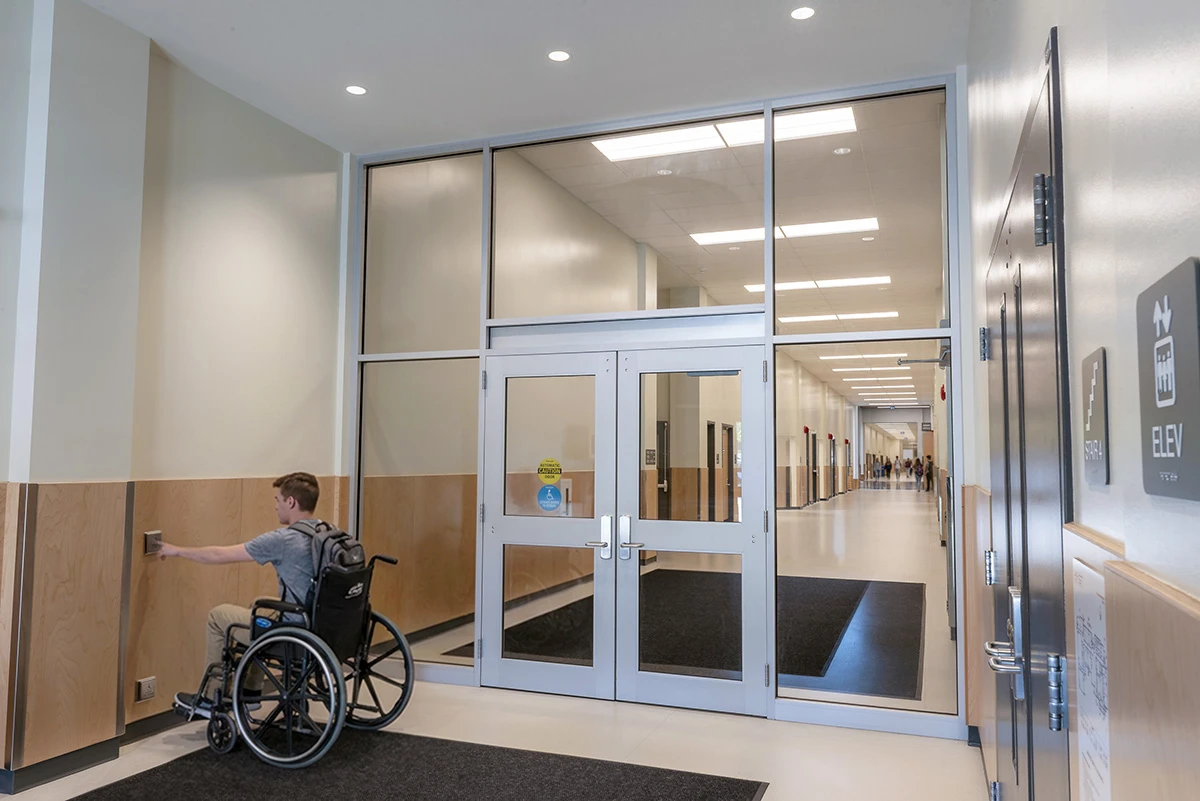
Hailed as the largest seismic project in the history of the Vancouver School Board (VSB), the replacement of Eric Hamber Secondary School’s existing 1960s building offers students a state-of-the-art learning environment. Among many of the project goals, according to the VSB, the new school building showcases a modern approach to fire and life safety.
Part of the path toward this moder approach, multiple fire-rated glazing systems from Technical Glass Products (TGP) contribute to the school’s fire- and life-safety requirements without compromising access to daylight and visual connectivity. This supports a safer and more student-centered school setting.
The over 193,750 square foot (18,000 square meter) building is a huge step forward for the VSB, especially considering the building addresses multiple goals for occupant safety and wellbeing.
The project at Eric Hamber Secondary School brings the school district closer to its goal of ensuring every student learns in a seismically safe school. In an early feasibility study, the district discovered full building replacement to be the most cost-effective route.
The project also needed to meet current building code requirements for fire and life safety. In both Canada and the United States (US), this necessity remains central to many school renovations and rebuilds. At 60 years old, the Eric Hamber Secondary School’s original building represents the average age of most school buildings in the US according to the National Center for Education Statistics (NCES). Among these schools, about two-thirds have not undergone a major repair or renovation since 2010.
In that time, not only have building codes gone through multiple updates, increasing the stringency of code-compliance, but fire-rated materials and systems have advanced to offer more expansive glazing areas and design-forward framing systems. Further, awareness of how access to daylight, open sightlines and other occupant-centered considerations support student learning has increased.
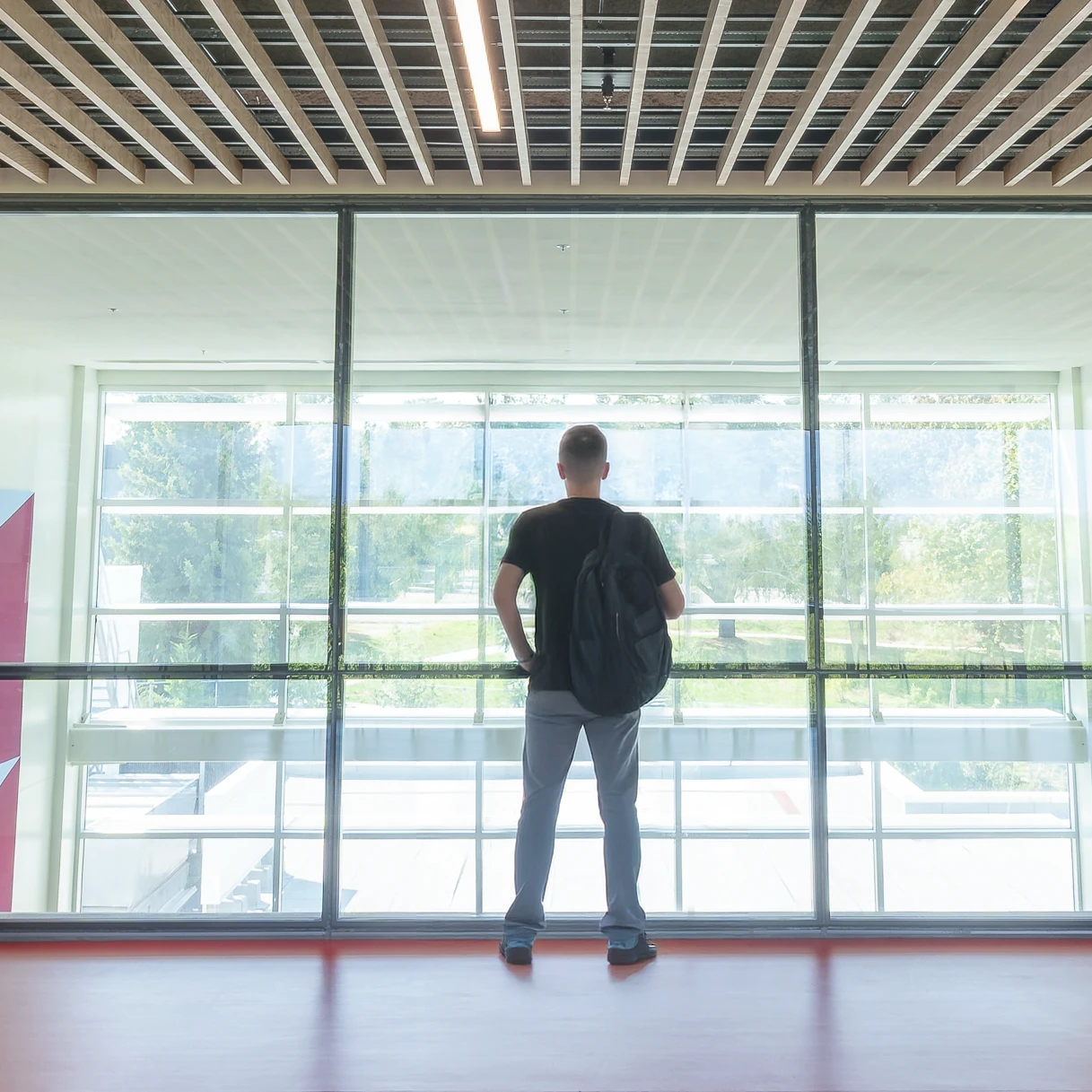
The school’s design leverages glazing systems along its façade and within its interior to support daylight access and intuitive wayfinding. Some of these glazing assemblies are also fire-rated to meet code requirements for occupant safety without inhibiting a light-filled and visually connected design.
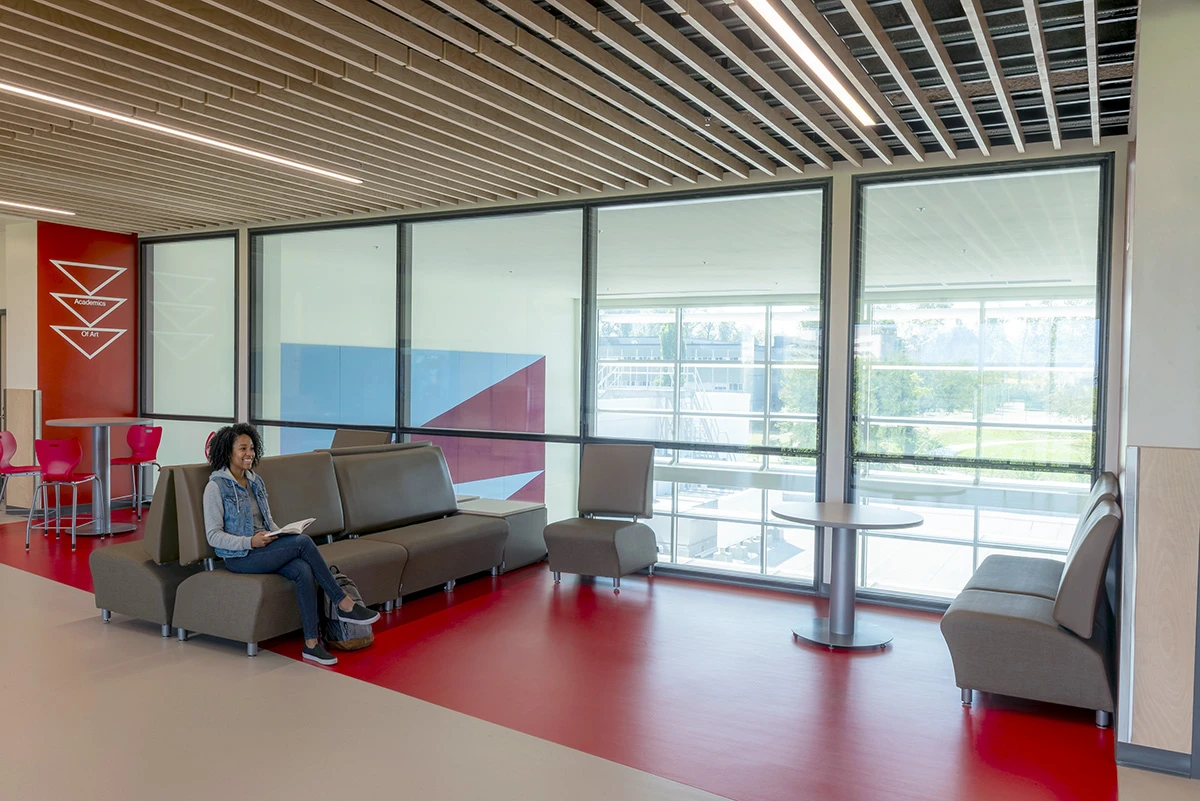
In the past, achieving an open and naturally lit fire-rated design may have proven difficult if not impossible. Previously, transparent, fire-rated materials were relegated to vision lites in fire door assemblies and small openings within fire barriers. Today’s fire-rated glazing options allow designers to plan for massive fire-rated curtain walls, full-lite, fire-rated glass doors and expansive sidelites and transoms. The project team behind the secondary school utilized all these solutions to create a code-compliant school that also maximizes daylight access and supports an open building interior. In terms of daylighting, the third story interior curtain wall system provides a notable example.
This fire-rated glazing system allows light from the exterior, non-rated curtain wall to filter deep into the building’s interior, providing multiple light-filled common areas for students to socialize or study. It also supports compartmentation efforts and meets code requirements for fire barriers. Specifying the Fireframes SG Curtainwall® Series with Pilkington Pyrostop® fire- and impact-rated safety glass from TGP, the project team was able to maximize the spans of glass used in the assembly and create a monolithic structural glazed appearance. Because the frames of both systems are visible from the entry and third-floor landing, using an interior, fire-rated curtain wall with narrow-profile frames preserves a cohesive design throughout the building.
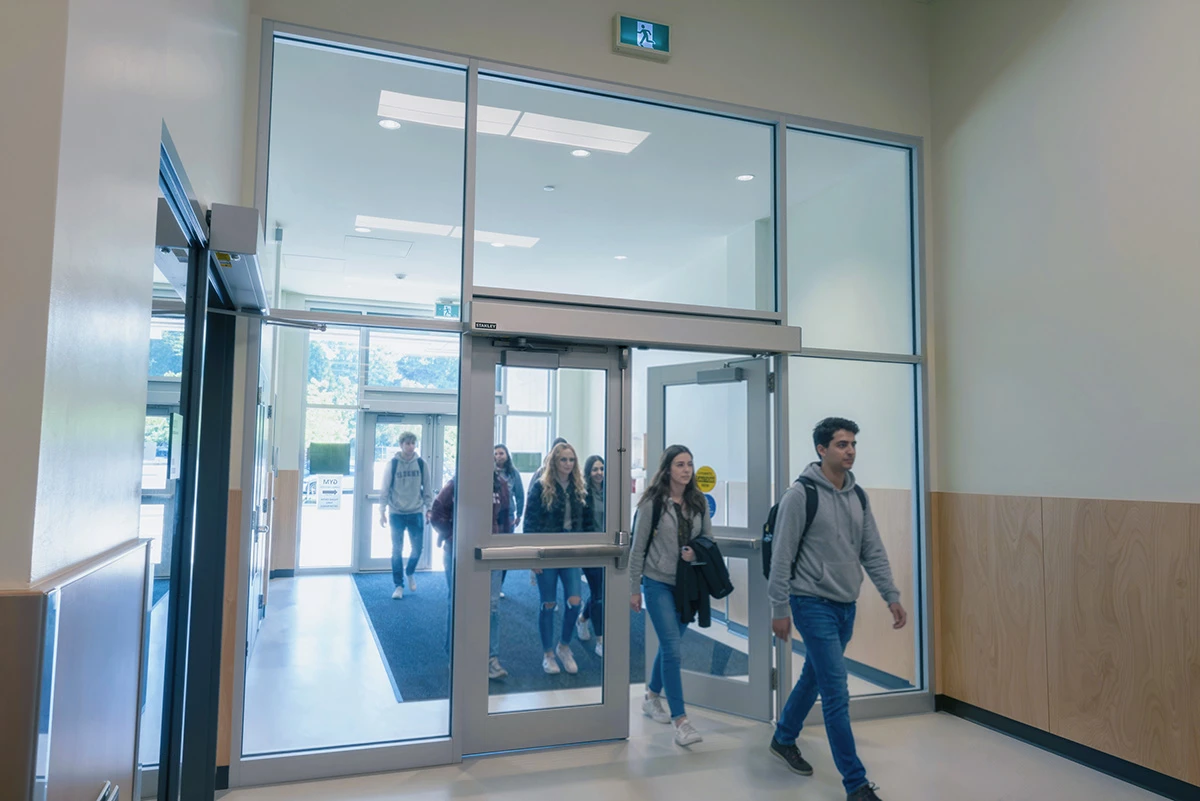
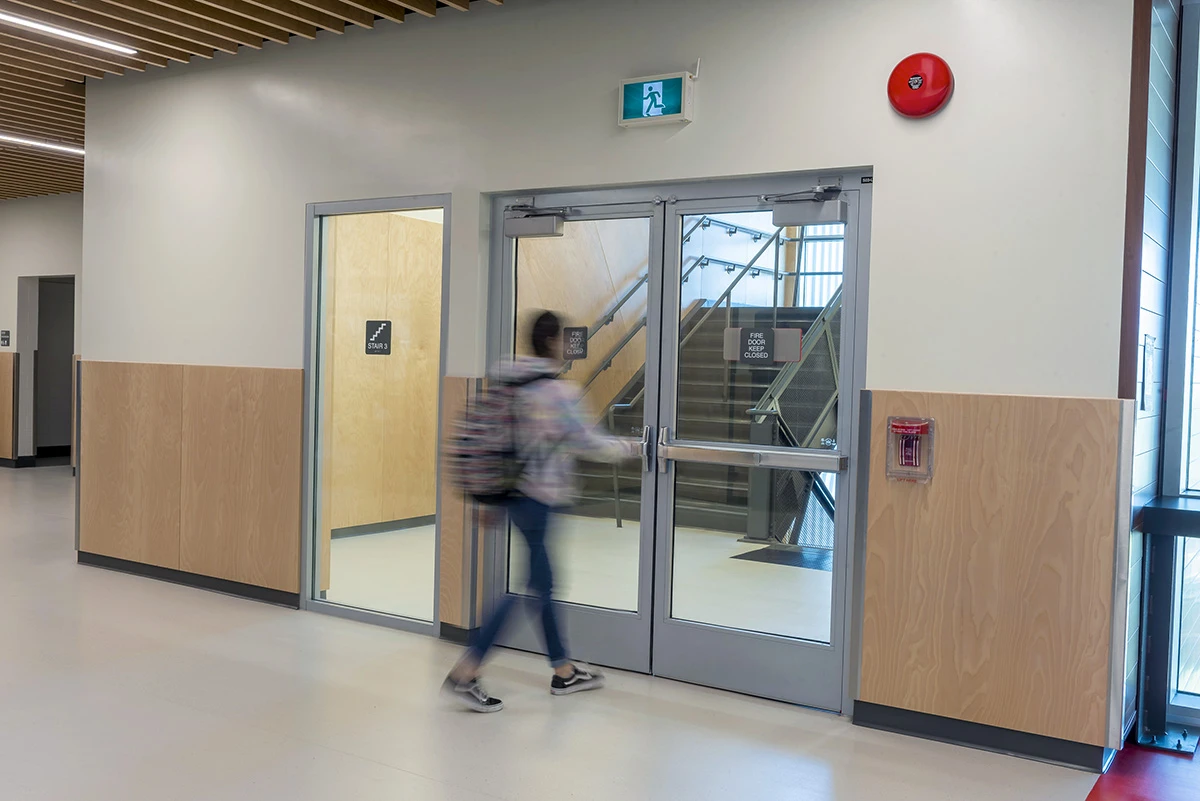
The full-lite, fire-rated door assemblies were specified at several elevations. Some of them include expansive, fire-rated glass sidelites and transoms while others are paired with neighboring glass curtain wall panels. The curtain wall panels, sidelites and transoms achieve a 60-minute fire-resistance rating while the doors are fire-resistance rated for 45 minutes. They all work together to meet code requirements for safeguarding egress routes without sacrificing an open design. By extending sightlines between the stairs and each level, the Fireframes® Designer Series doors with Fireframes® Aluminum Series transoms and sidelites used throughout the project support intuitive wayfinding for students.
Specifying fire-rated door assemblies is one of the more difficult endeavors in the construction world. And, as Patrick Luther, project manager at TGP, explains, because this school had a last-minute change to the fire doors’ hardware, meeting the project’s fire-rated needs and occupant wellness goals necessitated an adaptable approach for all involved.
Originally engineered with concealed overhead stops, the school board requested the door’s hardware be changed to Glynn-Johnson 90 Series, a surface mounted door stop system. The machining needed for the new closers was different than what was originally planned, so the engineering and manufacturing teams at TGP had to pivot post-fabrication of the original specifications to ensure the doors were manufactured, shipped and installed on time. According to Luther, making the change in hardware required not only effective and quick communication but also the nimbleness to accommodate. Since all of TGP’s systems are custom built for individual projects, multiple departments needed to collaborate and communicate to ensure this seemingly small change in detail was handled accurately and did not impact the functionality of the project’s multiple fire-rated door systems.
The new Eric Hamber Secondary School building is a testament to both the expansion of fire-rated design options and adaptable engineering. From expansive curtain walls to full-lite fire doors, TGP’s fire-rated glazing systems meet multiple code requirements without compromising student wellbeing and comfort. Additionally, because the project stakeholders could collaborate and adapt to changes during the construction phase, they were able to meet, and exceed the project team’s goals for the new school. In fact, walking through the Eric Hamber Secondary School, students most likely would not have guessed there were any challenges in creating the glass assemblies that help fill the interior with light and allow visual connection across multiple spaces. Instead, they see a school that is welcoming, connected and able to protect them during emergencies.



