

Minimize Hazards and Maximize Comfort
David Vermeulen, North America Sales Director, Technical Glass Products
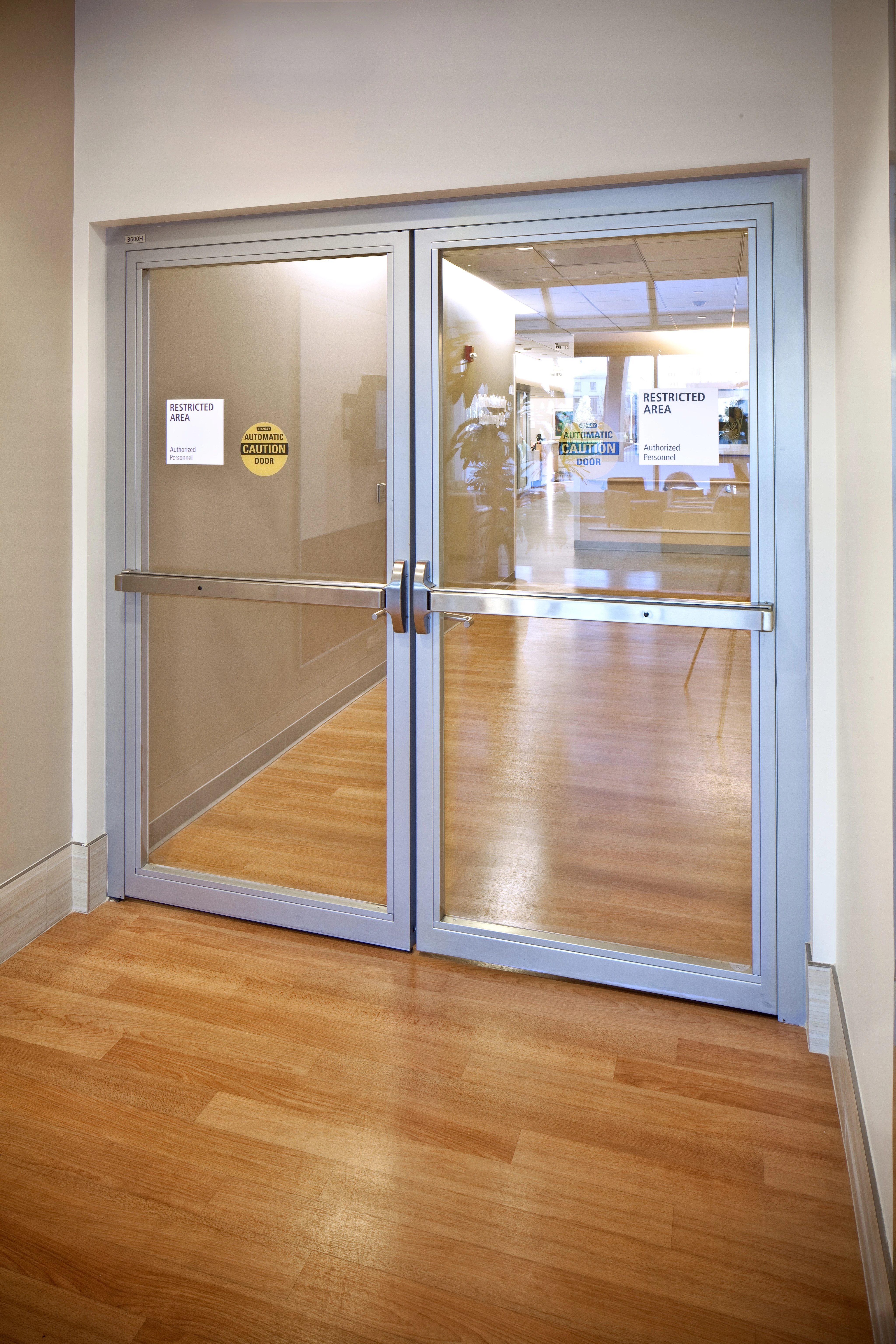
Health care design encompasses a wide range of project types. From neonatal intensive care units (NICU) to walk-in clinics, each building presents project teams with several challenges for meeting code requirements, satisfying best-practice recommendations and creating a space that is restorative.
Behavioral health facilities are no different. Among many other considerations, balancing life safety design and occupant comfort is at the heart of these in-patient centers. Often, this entails optimizing communal and patient rooms for daylight access and to mitigate sound transfer while also meeting code-driven requirements for fire and life safety. Impact- and fire-rated glazing assemblies remain a key solution for achieving all these goals and more.
As a part of a comprehensive approach to life safety design, these systems allow project teams to create code-compliant interiors that do not compromise open sightlines or occupant health and wellness.
What does life safety design mean in behavioral health facilities
Life safety design represents a several strategies for protecting occupants from multiple physical safety threats. In behavioral health spaces, it means designing first and foremost to meet code requirements for fire and life safety. This includes ensuring openings along a means of egress system contribute to both exit strategies and shelter-in-place protocols since some occupants may not be able to evacuate without assistance.
In addition, life safety design in these settings also includes incorporating materials that are impact-resistant. Doing so minimizes harm risks for both patients and providers. Strategically incorporating these materials also helps deter escape to ensure patients can remain in a safe environment to receive necessary care. Further, due to the specialty care given at these centers, increasing visual connection between spaces can also be considered a part of life safety design. This is because it allows providers to safely and unobtrusively monitor patients.
Over the past two decades, several advances in fire-rated glazing have allowed these materials to meet code-requirements for fire and life safety as well as impact-resistance and design goals for optimal sightlines.
Solve multiple challenges in life safety design simultaneously
Before 2006, many fire-rated glazing applications used wired glass. While this product meets requirements for fire protection, it is not impact-resistant. In 2006, the International Building Code (IBC) limited its use to specific applications in High Hazard occupancies (H-1 to H-5). In response, many specifiers turned to fire-protective glass ceramic and fire-resistant glazing assemblies to meet both fire and life safety requirements.
These fire-rated glazing products provide impact-resistance to protect occupants during a fire and to minimize injuries from broken glass. For example, FireLite Plus® is a fire-rated and impact-rated glass ceramic that can be used in a wide range of opening applications that need to be both impact-resistant and protect against fire and smoke. For openings and barriers that need impact-rated fire-resistant materials, Pilkington Pyrostop® provides a solution.
Both glazing products, when paired with appropriately rated fire-rated frames, create a transparent defense against multiple threats to occupant life safety. In this way, they also support approaches to life safety design that ease barriers to visual monitoring patient wellbeing and safety.
More than glass: other considerations for life safety design
Along with impact- and fire-rated glass, behavioral health facilities can support life safety design while maximizing occupant wellness by incorporating non-rated specialty glazing systems throughout the built environment. For instance, opening systems that include integrated louvers can minimize harm risks for occupants, improve building hygiene and mitigate sound transfer between adjacent spaces.
Taking the place of blinds and curtains, these units can include ligature-resistant, cordless operators. Leading systems also meet American Architectural Manufacturers’ Association (AAMA) 501.8 performance certification for resistance to human impacts of 2,000 foot-pounds. As such, they help protect patients and providers from physical harm. Further, the hermetically sealed louver system eliminates difficult or impossible to clean components to efficiently bolster patient room hygiene. These systems can also provide Sound Transmission Class ratings (STC) on par with concrete blocks to support acoustically isolated environments where desired.
As a result, these systems can support multiple points of occupant wellness—whether they are included into interior or exterior openings.
Meet project goals through collaboration
There are many avenues to achieving life safety design requirements and best-practice recommendations for behavioral health facilities. There are also many products—from multiple manufacturers—that can help teams improve their buildings for occupant safety and wellbeing. In the past, building professionals would not only have to coordinate the compatibility between systems from different manufacturers to ensure functionality but also varying lead times to keep jobsites uncluttered for accessibility to different trades.
That said, the coordination this approach requires is far from being without risks. Unforeseen delays, mistimed manufacturing schedules or negligence in determining product compatibility can create additional hurdles for project designers and owners. These challenges appear in the design and construction phases of a project as well as its occupancy. Project teams can sideline these obstacles by collaborating with manufacturers that work together to provide multiple, compatible solutions for behavioral health facility design.
For instance, Technical Glass Products (TGP), AD Systems and Unicel Architectural can combine systems to develop solutions for a project’s specific needs. This close relationship not only supports the easy coordination of shipping and installation processes but also streamlines points of contact for ongoing maintenance and inspection.
Contact TGP today to learn more about how this collaborative approach benefits both design teams and end-users.

David Vermeulen is North America Sales Director for Technical Glass Products and also the author of the Fired Up blog on Glass Magazine.


