

Forced-entry Resistance: What it Means and How it Supports Building Security
Devin Bowman, General Manager, Technical Glass Products
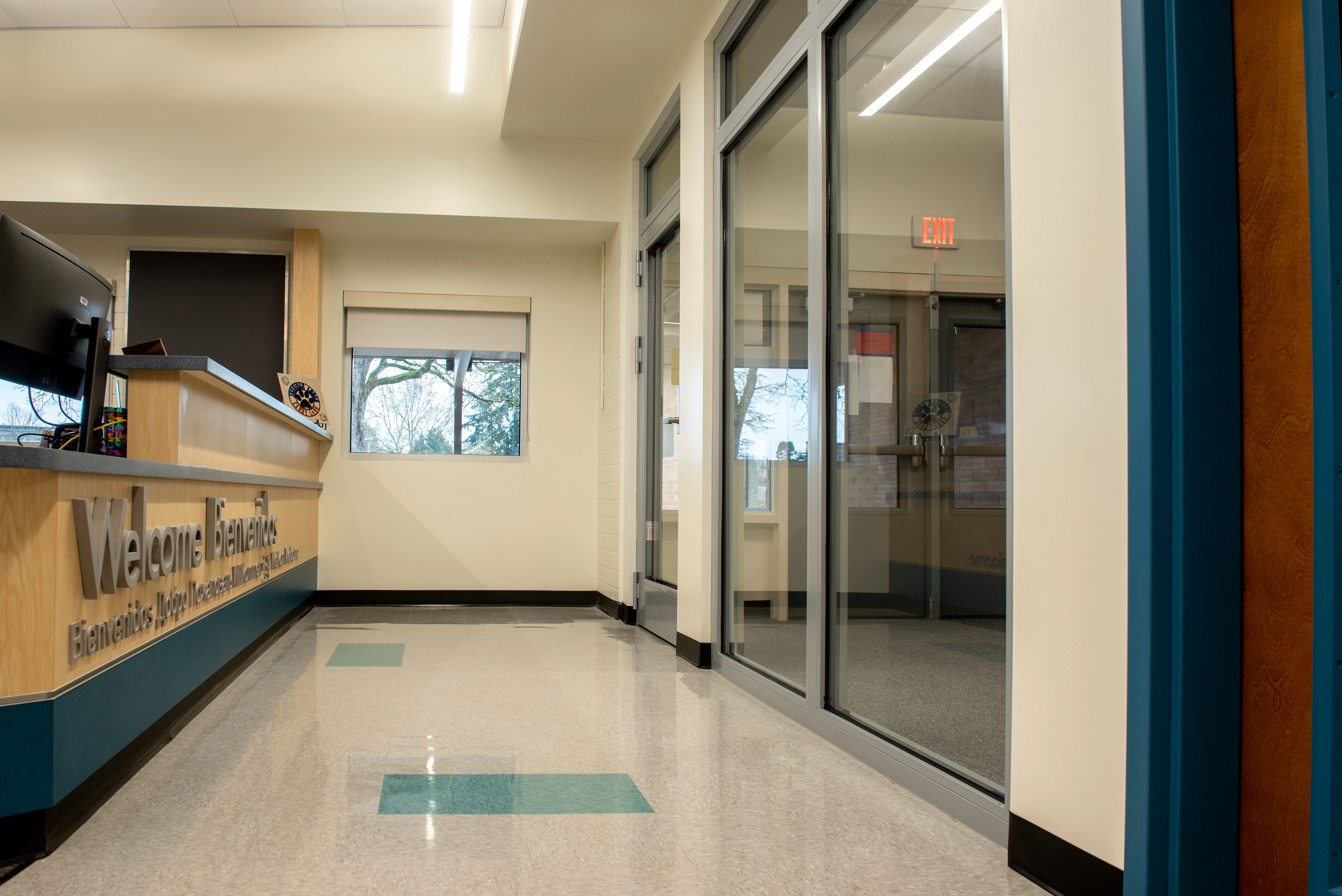
Designing for school safety almost always involves buying time. For example, fire- and life-safety code requirements mandate the use of fire-rated materials and systems in an effort to provide occupants with a safe window to leave while first responders enter to find those who need assistance and extinguish fires inside the building. When it comes to enhanced school security, best practices also prioritize time by seeking to delay, deter and deny violent actors from the property perimeter to the classroom door.
Rather than create an impenetrable fortress, these recommendations often focus on layering systems to provide occupants with adequate time to contact first responders and take appropriate actions, whether that is sheltering in place or evacuating the building. A multilayer approach to safer school design involves both creating several layers of security and understanding how the layers work together to harden a school building effectively.
Uniting several layers of protection, security glass plays a key role in meeting goals for school safety designs. While many associate the term with bullet-resistant glass, security glass also includes forced-entry rated glazing. Perhaps less well-known, this type of glazing supports building security plans when incorporated strategically into a design.
Forced-entry resistant security glass creates time barriers
Like bullet-resistant glass, forced-entry rated glazing assemblies are shot with 10 rounds from an AR-15 rifle (or equivalent ballistic firing mechanism) as a part of their testing standards. However, forced-entry rated glass can allow bullet penetration and still pass its test. That is because this type of security glass is meant to delay ingress, not be bullet-resistant. Even if a bullet passes through, the glass will prevent a large opening from being created by subsequent blunt-force attacks.
Forced-entry resistant security glass is meant to work with other measures, like locking hardware, surveillance technology, fences and other Crime Prevention Through Environmental Design (CPTED) principles, to slow and delay the ingress of violent threats at multiple points on a school’s campus. With proper specification, it supports the creation of time barriers, which serve to extend the length of time between identifying a threat, contacting authorities, engaging in security protocols and the arrival of first responders. It is crucial to school safety designs and other projects that may benefit from enhanced security.
Multifunctional, fire- and forced-entry rated glass supports school safety designs
Delaying and deterring the ingress of violent intruders is not the only aspect of safer school design. Given there are approximately 3,000 fires per year on school campuses, meeting code-driven requirements for fire and life safety is critical to school safety design.
That said, for some applications, enhanced security goals and code requirements for fire and life safety intersect. In these instances, it is essential to choose systems that either have compatible components or are tested to multiple standards to ensure a multifunctional, forced-entry and fire-rated assembly can meet fire rating standards and vice versa.
Understanding the why behind this consideration requires knowing about fire tests. In them, a glazing assembly is rated in accordance with a model system undergoing tests meant to simulate fire conditions in the real world. This includes a standardized temperature rise, a maximum temperature peak, a constant temperature and, often, a hose stream test. Because security glazing components are commonly plastic-based and, as a result, burn quickly and intensely, they can exceed the testing protocols of the fire test. As a result, when incompatible security glass and fire-rated components are combined, they may result in an assembly that has significantly reduced or entirely negated fire ratings.
When security concerns and code requirements overlap, it is essential for school safety designs to prioritize systems that are designed to be multifunctional—like the TGProtect® FR System from Technical Glass Products (TGP). Doing so ensures one form of protection is not sacrificed for another.
Beyond safer school design
School safety design is incredibly important. It helps defend students, teachers and staff from a variety of threats to life safety. It is also incredibly complex, often requiring input and collaboration from a wide range of professional fields: design, security, manufacturing, engineering and more. Security glass and multifunctional, fire-rated glazing assemblies can help these teams solve several challenges in designing safer, more secure and more vibrant school buildings.
While designing for the safety of students and faculty will remain critical, building security extends beyond educational occupancies. Assembly spaces, commercial buildings, retail, houses of worship and other occupancies can also benefit from security glass—whether it is forced-entry rated, ballistic-rated or both.
To find out more about the benefits of using security glass in commercial buildings and other projects, check out TGP’s Fire + Security-Rated Solution hub.

Devin Bowman is General Manager of Technical Glass Products (TGP) and AD Systems. With nearly 20 years of industry experience, Bowman is actively involved in advancing fire- and life-safety codes and sits on the Glazing Industry Code Committee (GICC).


