

Best Practices Recommendations and Code-Compliant Health Care
David Vermeulen, North America Sales Director, Technical Glass Products
Health care design can be complex. Retrofit projects and new builds alike must meet a wide range of code requirements, which are often more stringent than other occupancies. On the one hand, this is because health care environments often encompass many uses, from inpatient care to radiology and more. On the other hand, safeguarding patient and provider wellbeing is more nuanced given their unique needs, which can include designing for high-hazard spaces, more robust shelter-in-place strategies, different opening requirements and more.
Further, multiple best-practice guidelines from entities such as the International Heath Care Facilities (iHFG), the Facility Guidelines Institute™ (FGI) and the World Health Organization (WHO) establish minimum standards for health care design that focus on occupant safety and wellbeing and do not fall within the scope of building codes. These guidelines offer suggestions for sound attenuation, maintaining healthy working environments, additional accessibility considerations and much more.
Navigating code-compliance and achieving best-practice recommendations can seem like a significant constraint for design teams. However, architectural glazing systems can offer multiple solutions for both when planning health care environments.
How do best practices and code requirements differ in health care design?
Before diving into the important role architectural glazing systems play in code-compliant and occupant-centered buildings, it is important to first define key differences between best practices and code requirements. In health care design, both best-practice recommendations and building code requirements seek to standardize elements that ensure safety, accessibility and building performance. How they differ is in their timing and scope.
Health care design guidelines are developed to serve Health Authorities and design teams (including consultants) on the special needs of health care environments. Elements within these guidelines provide frameworks for updating future code editions. Further, best-practice recommendations can sometimes fall outside of the scope of building code. For instance, “Guidelines” from FGI defines both the types of care that can be performed in certain rooms as well their access control level and surface material needs. Best-practice guidelines reference model and local codes, noting that a health care environment should meet all code-driven requirements.
Alternatively, building codes, whether model or local, rarely, if ever, acknowledge these guidelines. Instead, they provide rules and standards for the design, construction, alteration, materials, maintenance and performance of almost all buildings. They establish minimum requirements for protecting public health, safety and general welfare through construction, including requirements for fire-rated design, maintaining free egress and other performance and accessibility benchmarks.
Unlike best-practice guidelines, building codes can vary from location to location. This makes it important for design professionals to check with local codes and to clarify requirements with an Authority Having Jurisdiction (AHJ).
Architectural glazing supports multiple best practices for health care environments
Multiple types of architectural glazing allow project teams to readily achieve best practices for health care environments without having to compromise a modern design aesthetic. For instance, glass curtain walls built with narrow-profile steel frames can maximize daylight access and provide improved thermal performance. Citing benefits like decreased lengths of patient stays and more productive staff, the FGI Guidelines recommend daylighting strategies in multiple areas of medical facilities.
While daylight is important, there are areas that benefit from visual and acoustic privacy. Limiting sound transfer between areas of the built environment can support a more restful atmosphere overall and safeguard patient confidentiality. Visual privacy also contributes to confidentiality efforts as well as patient well-being. Both visual and acoustic privacy can be attained with channel glass systems. These linear, “U”-shaped, cast-glass channels are self-supporting and can be installed vertically or horizontally within an extruded metal perimeter frame. Channel glass can obscure vision and dampen sound to maintain privacy and appropriate noise levels in multiple areas of a health care environment.
Many health care projects have combined glass curtain walls and channel glass systems to balance daylight access with privacy and sound attenuation goals. Project teams can also specify glazing systems with integrated blinds. Because these systems permanently seal blinds within a double-glazed cavity, they can also help health care centers achieve best-practices recommendations for building hygiene.
Fire-rated glass supports code compliance in multiple areas of health care facilities
In addition to contributing to recommendations for occupant-centered health care environments, specialized glazing assemblies can also help project teams meet code-driven requirements without compromising design intent. Fire-rated glass, for instance, can be specified in multiple areas that require fire ratings without inhibiting sightlines, daylighting strategies and other health care design recommendations.
For example, if a patient room is located along a corridor, its door will most likely need a fire rating. Fire-rated doors help maintain egress routes during a fire. They also support shelter-in-place strategies, an important consideration given patients may not be able to leave a building on their own. When these systems incorporate fire-rated glass, they can also allow medical providers to easily monitor patients during day-to-day operations.
Further, full-lite, fire-rated doors and fire-rated curtain walls can also be incorporated into common areas. Doing so can help designers maximize daylight penetration from exterior systems, support intuitive wayfinding and allow compartmentalization without obstructing visual connection. The project team behind Cincinnati Children's Medical Center, Clinical Services Pavilion understood how these benefits work together to contribute to a code-compliant design meant to foster collaboration between medical researchers.
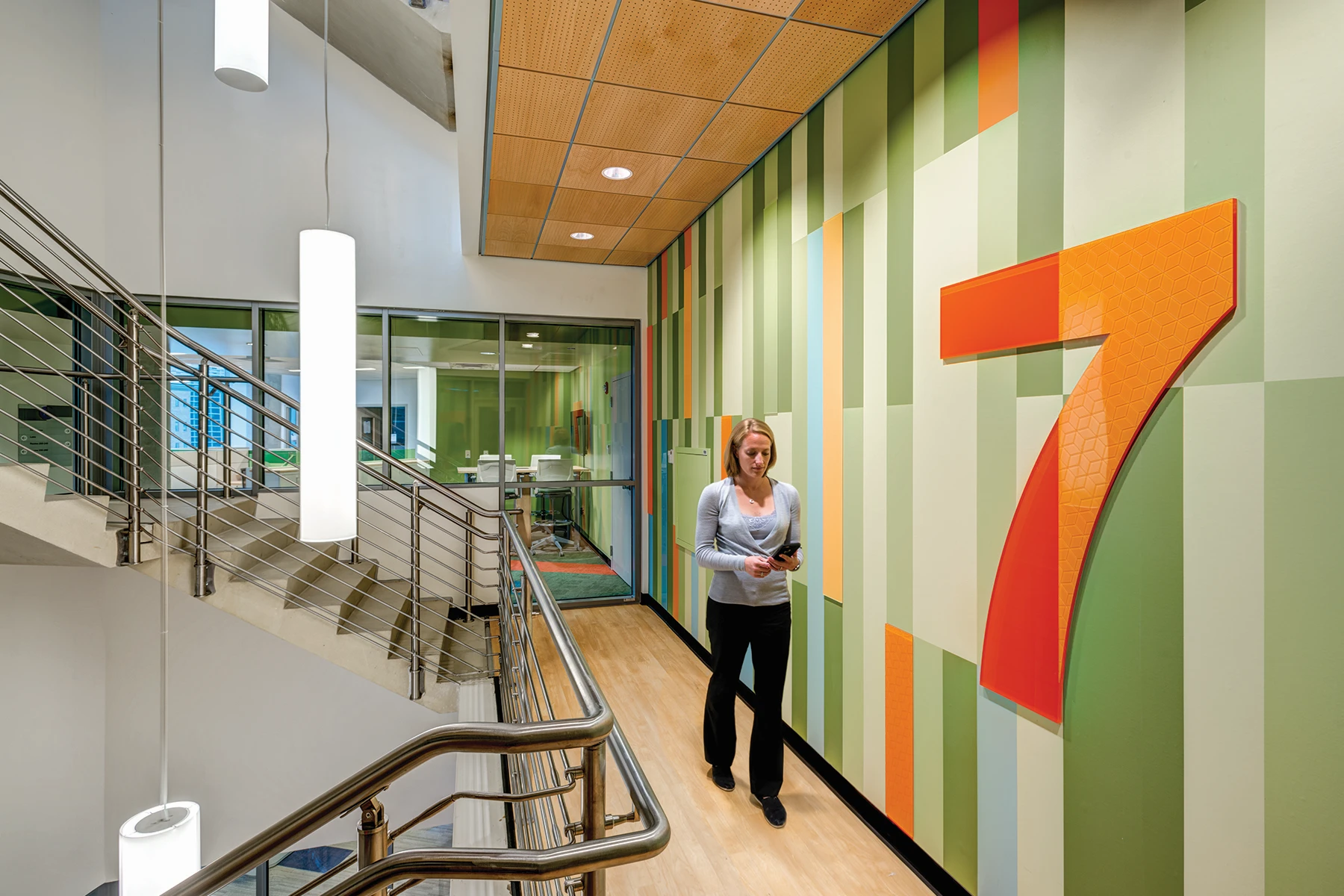
Utilizing 120-minute fire-resistant glass doors and curtain walls within the pavilion’s central staircase, the design team ensured daylight access, extended sightlines and visually connected multiple floors—all while meeting code requirements for safe egress. This example demonstrates just one way fire-rated glazing contributes to both code compliance and best-practice recommendations for health care design.
Well-researched health care design can drive value and increase long-term viability
While it may seem that best-practice guidelines and code requirements for fire and life safety limit what project teams can and cannot do within a health care environment, the reality is that there are many paths to achieve these standards, including paths that prioritize cutting-edge, occupant-centered designs.
That said, fire-rated glazing systems are just one component in these complex construction puzzles. In addition to fire-rated and non-rated assemblies, there may be rooms that require X-ray and Gamma ray shielding materials. Specialty glazing assemblies in these applications can support occupant protection without necessitating design compromise.
Further, building professionals may also need to specify multiple door systems, interior and exterior window systems, access control systems and much more. With increasingly stringent demands placed on nearly every inch of the health care environment and the upward movement of construction costs, these professionals are encouraged to collaborate early in the design process to ensure they know all their options.
Technical Glass Products (TGP) works closely with AD Systems, Unicel Architectural and other Allegion brands. This close partnership can help project teams understand the latest solutions to challenges across the entire spectrum of health care design. Contact the TGP team today to learn more.

David Vermeulen is North America Sales Director for Technical Glass Products and also the author of the Fired Up blog on Glass Magazine.


